Why Security Tools Fail When the Network Foundation Is Shaky
Security teams invest in firewalls, endpoint detection platforms and central monitoring because they need to prevent, detect and contain attacks. But those tools depend on something that is easy to overlook: a network that is correctly designed, physically reliable and understood by the people who operate it.
When the foundation is weak, security controls can be bypassed, lose visibility or become unavailable at exactly the wrong moment. A firewall cannot enforce a rule on traffic that never passes through it. An endpoint detection platform cannot report reliably from a device that has lost network connectivity. And a carefully planned network boundary is only useful if the switches, links and cabling actually put devices on the intended side of it.
This is why physical infrastructure is part of cybersecurity, not a separate facilities concern. In twelve years working across office fit-outs, corporate IT and operational technology (OT), I have seen incidents where the apparent security problem began with a cabling or switching mess. The lesson is plain: tools matter, but they cannot compensate for a shaky network foundation.
Security tools depend on the network beneath them
Security tooling is often discussed as if it operates in its own layer, independent of the systems carrying its data. In practice, every control has network dependencies. Firewalls need correct routing and traffic paths. Endpoint detection platforms need working connections to management and analysis services. Logging systems need telemetry delivered from switches, servers and security appliances. Identity services need to be reachable when users and machines authenticate.
This is security tool dependency: the relationship between a security capability and the network services, paths and physical components that make it work. That dependency is not automatically a weakness. It becomes one when the organisation does not know what the tool needs, how traffic reaches it, or what happens when a link or device fails.
For example, a firewall may be installed and configured correctly, yet a second path between network segments could allow traffic to avoid it. An endpoint agent may be present on a laptop, but if a misconfigured switch port places that laptop on the wrong VLAN, the surrounding controls may no longer match the intended policy. A monitoring platform may be healthy while the switch feeding it silently stops forwarding the relevant logs.
Physical layer faults create security blind spots
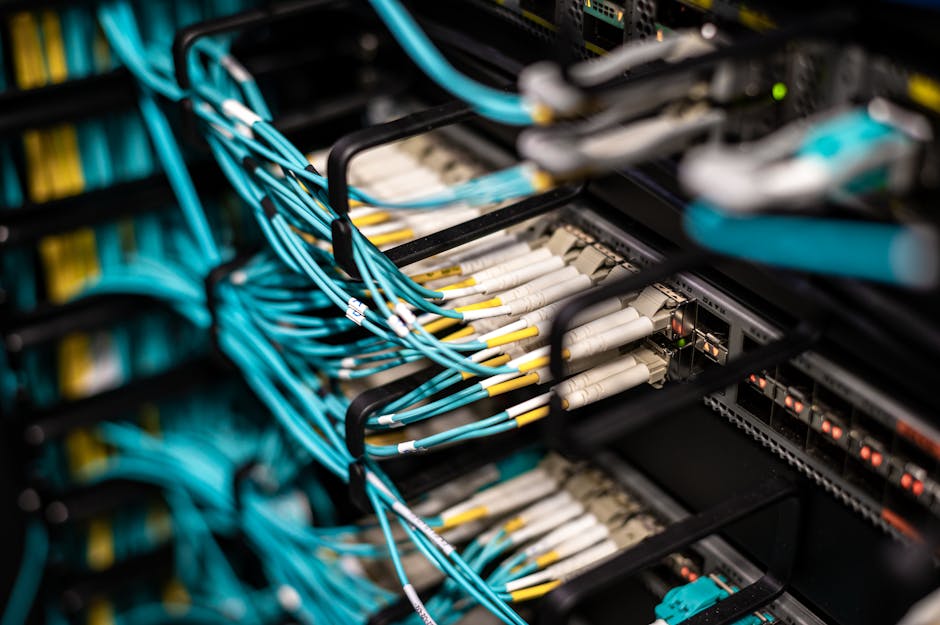
Physical layer reliability is not just an availability concern. Faults in cabling, optics, patch panels, power and switching can create security blind spots as well as outages. A link that intermittently drops can interrupt telemetry. A mispatched cable can connect a sensitive device to an unintended network. An unlabelled patch panel can turn a planned change into guesswork, making it harder to establish which device is connected where.
These problems are especially difficult to investigate when they appear intermittently. A monitoring dashboard may show a device disappearing and reappearing, but not explain that a damaged fibre connector is causing packet loss. A security analyst may investigate missing logs as a platform issue, while the actual cause is a switch uplink that is flapping. During an incident, uncertainty about the physical path can delay containment and complicate the evidence trail.
Small physical faults, significant consequences
- Intermittent links can disrupt authentication, management traffic and the delivery of security telemetry.
- Incorrect patching can connect devices to the wrong segment or create an unexpected path around a control.
- Unmanaged switches can introduce unknown connections, weak configuration and gaps in monitoring.
- Power or environmental failures can take security appliances or network links offline alongside business systems.
- Poor documentation can slow incident response because responders cannot confidently trace a device’s connection.
Unmanaged switches in production are a particular concern. They may appear to solve a short-term problem—an extra port is needed, so someone adds a small switch under a desk—but they can undermine the intended network design. They may not provide the configuration control, visibility or operational consistency required to enforce and verify security boundaries. A mystery cable is not proof of a breach, but it is a security smell worth investigating.
Segmentation is a design outcome, not a checkbox
Segmentation is often presented as a simple task: create VLANs, apply firewall rules and separate users, servers and OT devices. In reality, effective segmentation depends on capable switching, correct design and consistent operation. A VLAN is a useful building block, but it does not by itself guarantee that traffic between systems is controlled or that devices are connected to the segment intended for them.
Good network design defines where boundaries sit, how traffic crosses them and which devices are permitted to communicate. It also accounts for the real topology: uplinks, redundant paths, wireless access, remote sites, management networks and any legacy equipment that cannot easily be changed. The physical layout must support the logical plan. If a switch, trunk or patch connection https://seo.edu.rs/blog/what-is-poe-and-why-does-it-matter-for-network-design-11222 is misconfigured, the intended boundary may not work as expected.
Vendors such as Cisco offer switching and routing platforms that can support segmentation and visibility when they are selected, configured and maintained appropriately. In industrial environments, MOXA is one example of a company supplying networking products used in OT settings. The brand on a device does not make a design secure by itself. The controls still depend on sound architecture, secure configuration, lifecycle management and a clear understanding of how the equipment is connected.
Questions to ask about a segmented network
- Which devices and users belong in each segment, and why?
- Where is inter-segment traffic routed and inspected?
- Are switch trunks and uplinks documented and configured deliberately?
- Can a technician trace a port from the switch to the outlet and the connected device?
- What happens to security monitoring and business operations if a switch or link fails?
These are practical questions, not paperwork for its own sake. They help confirm that the design exists in the live network, rather than only in a diagram created during a project.
Security tools cannot fix an unclear traffic path
Firewalls are most effective when traffic paths are known and predictable. If traffic can take an alternate route, or if routing and switching changes are not controlled, a firewall policy may not cover the flows its owners assume it covers. The same applies to inspection points, network access controls and monitoring sensors: their value depends on traffic being steered through them correctly.

Endpoint detection platforms have a different role, but they also rely on a functioning foundation. Endpoints need to communicate with management services to receive policy and send alerts. If connectivity is unreliable, security teams may see delayed or missing information. A device that is offline may still be protected locally, depending on the product and configuration, but the organisation’s ability to monitor and respond centrally can be reduced.
That is why security teams should test not only whether a tool is installed, but whether its full operating path works. Where does its traffic travel? Which network services does it rely on? What is logged if its connection fails? Who receives an alert? These questions expose dependency gaps before an incident does.
What ACSC guidance means in practice
Australian organisations often use guidance from the Australian Cyber Security Centre (ACSC) to inform their security programmes. Guidance around reducing exposure, controlling access, maintaining systems and monitoring activity is useful, but it has to be implemented on a network that can support it. The guidance does not replace accurate asset records, sound switching, reliable links or disciplined change management.
Put another way, ACSC-aligned controls assume that an organisation can identify its systems, understand how they communicate and apply protections consistently. Those assumptions become difficult to meet when the network is flat, undocumented or full of unmanaged equipment. A segmentation policy is hard to validate if nobody can establish which switch ports connect to the protected systems. Monitoring is hard to trust if telemetry paths are unstable or incomplete.
This is not a criticism of security guidance. It is a reminder that implementation crosses disciplines. Security architects, network engineers, facilities teams and OT operators need a shared view of the physical and logical environment. Otherwise, a control that looks complete on paper may be incomplete in operation.
Build reliability into the security design
Improving the foundation does not always require replacing every switch or rewiring an entire site. Start by establishing what is present and how it is connected. Then prioritise the weaknesses that could ACSC ISM undermine critical controls or disrupt response.
- Document the physical and logical topology. Record switches, links, patch panels, uplinks, power dependencies, VLANs and key traffic paths. Keep diagrams current after changes.
- Label infrastructure consistently. Labels should help a technician trace a connection without relying on memory or guesswork. Yes, the label maker belongs in the kit.
- Remove or govern unmanaged equipment. Identify switches that have appeared outside the approved design. Replace them, bring them under management or formally document an exception with compensating controls.
- Review segmentation end to end. Verify switch configuration, routing, firewall enforcement and actual device placement. Test that prohibited paths are blocked, not merely assumed to be blocked.
- Monitor network health as security-relevant information. Link flaps, errors, unexpected devices and missing telemetry can all help reveal conditions that affect security visibility.
- Plan for failure and recovery. Test what happens when a link, switch, firewall or monitoring service fails. Confirm who is alerted and how the network is restored safely.
A helpful operational test is to ask: what happens at 2am when this fails? If the answer depends on one person remembering an undocumented patch, or on a device with default credentials that nobody owns, the design needs more work. Resilience includes knowing how to isolate a fault without accidentally opening a path that was meant to stay closed.
Make the foundation part of the security conversation
Security programmes can become tool-centred because tools are visible, measurable and easy to procure. Network foundations are less glamorous: patching, labelling, switch configuration, cable testing, power planning and documentation. But these are not merely maintenance tasks. They determine whether security controls can see traffic, enforce boundaries and remain available under pressure.
When reviewing a firewall deployment or endpoint detection platform, include the network dependencies in the design and assurance process. Confirm the paths, the physical connections, the failover behaviour and the operational owner. Treat unexplained links and unknown switches as issues to resolve, not as harmless quirks of an old building.
Strong security starts with a network that people can explain, operate and trust. Physical layer reliability supports availability, but it also protects the visibility and enforcement on which modern security tools depend. Get the cabling and switching right, keep segmentation grounded in the real topology, and security investments are far more likely to work when they are needed.